
History of Alibag – Cultural Significance, Forts & Heritage of Konkan Coast
By Privy Stays · July 28, 2026 · Info
For most travellers, Alibag begins with the beach.
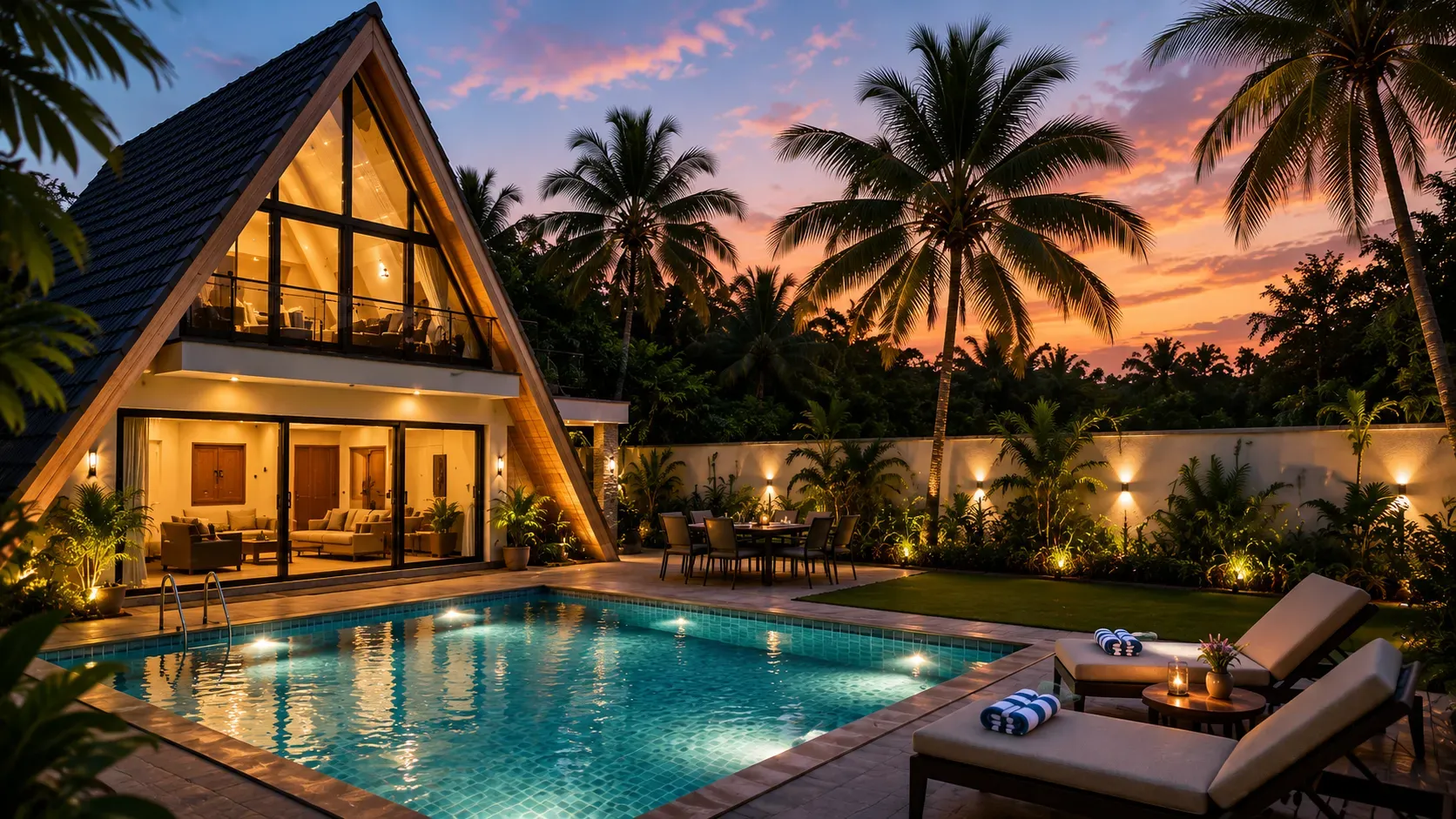
It's the destination where weekends slow down, private villas overlook swaying coconut palms, and sunsets paint the Arabian Sea in shades of orange and gold. Just a short journey from Mumbai and Pune, Alibag has become synonymous with luxury escapes, family holidays, and peaceful coastal living.
But beneath its relaxed atmosphere lies a story that stretches back centuries.
Long before Alibag became one of Maharashtra's favourite weekend destinations, it was a thriving maritime hub that shaped the history of India's western coastline. Merchant ships once sailed these waters carrying spices, silk, horses, and precious goods between Arabia, Persia, Europe, and India. Powerful sea forts guarded the coast, naval commanders defended the Konkan against colonial powers, and prosperous ports connected cultures from across the world.
The legacy of the Maratha Empire, the vision of Chhatrapati Shivaji Maharaj, the naval brilliance of Kanhoji Angre, Portuguese settlements, ancient temples, and traditional Konkani villages all remain woven into Alibag's identity today.
Unlike many historic destinations where the past survives only in museums, Alibag's heritage continues to thrive through its forts, festivals, cuisine, architecture, fishing communities, and centuries-old traditions that locals proudly preserve.
Understanding this history transforms the way you experience the destination.
Kolaba Fort becomes more than an island fortress.
Chaul becomes more than a quiet village.
Revdanda's weathered walls begin telling stories of colonial trade, while the narrow coastal roads reveal why this stretch of the Konkan was once among the most strategically important regions on India's west coast.
At Privy Stays, we encourage guests to experience more than just Alibag's beaches. Exploring its heritage offers a deeper appreciation of the destination and creates a journey that blends history, culture, nature, and luxury into one unforgettable escape.
This comprehensive guide explores the fascinating history of Alibag—from its ancient origins and maritime importance to its forts, cultural traditions, heritage sites, and the stories that continue to shape this remarkable coastal town.
Best Heritage Experiences
- Walk to Kolaba Fort during low tide
- Explore Portuguese ruins in Chaul
- Visit Revdanda Fort
- Discover Korlai Fort overlooking the Arabian Sea
- Experience traditional Konkani cuisine
- Attend local festivals and village celebrations
- Stay in a luxury villa while exploring Alibag's historic landmarks
Whether you're passionate about history or simply curious about the stories behind the places you visit, Alibag offers a fascinating journey through more than three centuries of maritime heritage and cultural evolution.
Table of Contents
- Why Alibag's History Is Worth Exploring
- A Timeline of Alibag Through the Ages
- The Origin of the Name "Alibag"
- Alibag During the Maratha Empire
- Kanhoji Angre and the Maratha Navy
- Portuguese Influence on the Konkan Coast
- Chaul – One of India's Oldest Trading Ports
- Alibag's Living Culture and Traditions
- Historic Forts You Must Visit
- Heritage Itineraries
- Where to Stay While Exploring Alibag's History
- Frequently Asked Questions
- Final Thoughts
Why Alibag's History Matters
History isn't simply about dates and monuments.
It's about understanding how a destination evolved and why it looks the way it does today.
Alibag's strategic position along the Konkan coast made it one of western India's most valuable maritime regions for centuries. Its natural harbours, proximity to Mumbai (then Bombay), and access to important sea routes attracted traders, rulers, explorers, and naval commanders from across the world.
As you travel through Alibag today, you'll notice reminders of this remarkable past everywhere.
Ancient temples stand beside Portuguese ruins.
Fishing villages continue traditions passed down through generations.
Maratha forts still rise from the Arabian Sea.
Colonial architecture blends seamlessly with traditional Konkani homes.
The destination isn't simply preserving history—it continues to live it.
For travellers who enjoy discovering the stories behind the places they visit, Alibag offers far more than beautiful beaches.
It offers one of Maharashtra's richest cultural landscapes.
The Origin of the Name "Alibag"
Every historic town has a story behind its name, and Alibag is no exception.
According to local tradition, the town derives its name from Ali, a wealthy member of the Bene Israeli Jewish community, who owned extensive gardens along this stretch of the Konkan coast.
These gardens were locally known as "Baghs."
Over time, residents began referring to the area as "Ali's Bagh," meaning Ali's Garden.
As languages evolved and pronunciation changed over generations, Ali's Bagh gradually became Alibag, the name recognised today.
Although simple, the story reflects something much larger.
It highlights Alibag's history as a meeting point of different communities, religions, and trading cultures. Merchants, settlers, fishermen, sailors, and travellers from various parts of India and overseas contributed to the town's multicultural identity, creating a coastal settlement that welcomed diversity long before tourism became its defining industry.
Even today, that spirit of cultural exchange remains visible in Alibag's architecture, cuisine, festivals, and local traditions.
More Than Beaches: A Living Heritage
Unlike destinations where history feels distant, Alibag's past is woven into everyday life.
Walk through the town and you'll encounter:
- Historic temples that continue to welcome devotees.
- Coastal forts that once protected the Maratha Empire.
- Fishing communities preserving generations-old traditions.
- Portuguese-era ruins standing beside modern villages.
- Ancient coconut groves and settlements that have shaped life on the Konkan coast for centuries.
- Local markets selling regional produce and traditional delicacies.
This combination of history, culture, and natural beauty makes Alibag one of the most rewarding heritage destinations in Maharashtra.
Rather than simply visiting monuments, travellers have the opportunity to experience a region where history continues to influence daily life.
How We Created This Guide
At Privy Stays, we believe that memorable travel is about more than choosing the right villa—it's about understanding the destination itself.
Many of our guests ask questions such as:
- Who built Kolaba Fort?
- Why is Kanhoji Angre important?
- What makes Chaul historically significant?
- Which forts should we visit?
- How old is Alibag?
- What cultural experiences shouldn't we miss?
This guide brings together the stories, landmarks, and traditions that define Alibag's heritage, helping visitors appreciate the destination beyond its beaches.
Whether you're planning a weekend getaway or a longer stay, understanding Alibag's history adds depth and meaning to every fort you explore, every village you visit, and every local meal you enjoy.
Alibag During the Maratha Empire
No chapter in Alibag's history is more influential than its association with the Maratha Empire.
During the 17th century, the western coast of India was one of the most contested maritime regions in Asia. European powers—including the Portuguese, British, Dutch, and Siddis of Janjira—competed for control of valuable trade routes across the Arabian Sea.
Recognising that India's western coastline was just as important as its land borders, Chhatrapati Shivaji Maharaj envisioned something revolutionary for his time: a powerful indigenous navy capable of defending the Konkan coast against foreign powers.
This vision transformed Alibag from a small coastal settlement into one of the most strategically important naval centres in the Maratha Empire.
Its natural harbour, proximity to major trade routes, and commanding position along the Konkan coastline made it an ideal location for maritime defence and naval operations.
The foundations laid during Shivaji Maharaj's reign would later be expanded by one of India's greatest naval commanders—Kanhoji Angre—whose leadership earned Alibag a lasting place in Indian maritime history.
Chhatrapati Shivaji Maharaj's Vision for Coastal Defence
While Shivaji Maharaj is widely celebrated for his military campaigns on land, his contribution to India's naval history is equally remarkable.
At a time when European fleets dominated much of the Arabian Sea, he understood that controlling the coastline was essential for protecting the Maratha kingdom.
His coastal strategy focused on three key objectives:
- Building strong sea forts along the Konkan coast
- Establishing a disciplined naval force
- Protecting coastal trade and fishing communities from foreign attacks
Several impressive sea forts—including Kolaba Fort, Sindhudurg Fort, and Suvarnadurg Fort—were either constructed or strengthened during this period.
These forts acted as military bases, observation posts, supply centres, and symbols of Maratha power.
Unlike conventional land forts, sea forts were designed to withstand naval attacks and monitor maritime activity, making them a unique feature of Maharashtra's coastline.
Today, they remain among the finest examples of military engineering in India.
Kanhoji Angre – The Admiral Who Defended India's West Coast
If Shivaji Maharaj laid the foundation of the Maratha Navy, Kanhoji Angre transformed it into one of the most formidable maritime forces of the 18th century.
Born into a family with strong naval traditions, Kanhoji Angre rose through the Maratha ranks to become Sarkhel, or Admiral of the Maratha Navy.
From his headquarters in Alibag, he commanded a fleet that challenged some of the world's most powerful naval empires.
Unlike many rulers of his era who focused primarily on expanding territory, Angre concentrated on protecting India's western coastline and securing maritime trade.
His naval fleet successfully resisted repeated attempts by:
- The British East India Company
- Portuguese naval forces
- Dutch trading fleets
- The Siddis of Janjira
European powers often referred to him as the "Pirate of the Indian Ocean."
In reality, Indian historians recognise him as one of the country's earliest and most successful naval commanders who defended indigenous maritime interests against colonial expansion.
Under Kanhoji Angre's leadership, Alibag flourished as:
- A naval headquarters
- A shipbuilding centre
- A maritime trading hub
- A strategic military base
His achievements remain a source of pride throughout Maharashtra, and his legacy continues to shape Alibag's identity today.
Kolaba Fort – Guardian of the Konkan Coast
No visit to Alibag's historic sites is complete without exploring Kolaba Fort.
Standing approximately 1–2 kilometres offshore, the fort appears to float on the Arabian Sea.
During low tide, visitors can walk across the exposed seabed to reach the entrance—a unique experience found at very few sea forts in India.
Originally commissioned by Chhatrapati Shivaji Maharaj and later expanded under Kanhoji Angre, Kolaba Fort served as the headquarters of the Maratha Navy.
Its strategic location allowed commanders to monitor approaching ships while protecting nearby settlements and commercial vessels.
Inside the fort, visitors can still explore:
- Massive stone ramparts
- Ancient freshwater wells
- Temples dedicated to local deities
- Historic cannons
- Bastions overlooking the Arabian Sea
- Old administrative structures
Despite centuries of exposure to wind, waves, and saltwater, much of the fort continues to stand remarkably well preserved.
Walking through Kolaba Fort offers visitors a powerful reminder of Alibag's maritime legacy and the engineering brilliance of the Marathas.
Portuguese Influence on Alibag and the Konkan Coast
Long before British rule extended across western India, the Portuguese had established a strong presence along the Konkan coastline.
Beginning in the early 16th century, they developed trading settlements, churches, military forts, and commercial warehouses that connected India with Europe.
Nearby Chaul and Revdanda became particularly important centres of Portuguese activity.
Their influence extended beyond commerce.
They introduced:
- European architectural styles
- Fortification techniques
- New agricultural practices
- Religious institutions
- Maritime trade networks
Although political control eventually shifted, traces of Portuguese heritage remain visible today through:
- Stone churches
- Colonial ruins
- Fort walls
- Historic gateways
- Coastal settlements
This blending of European and Indian influences gives Alibag a distinctive cultural identity that differs from many other coastal destinations in Maharashtra.
Chaul – One of India's Oldest Trading Ports
Just a short drive from Alibag lies one of western India's oldest continuously inhabited settlements.
Chaul has been an important trading port for more than two thousand years.
Long before European ships arrived, merchants from:
- Persia
- Arabia
- East Africa
- China
- Western India
visited Chaul to trade valuable goods such as:
- Spices
- Silk
- Cotton
- Horses
- Precious stones
- Coconut products
Its strategic location made it one of the busiest ports on India's western coastline.
Over centuries, different civilisations left their mark on the town.
Today, visitors can discover:
- Portuguese ruins
- Ancient temples
- Historic churches
- Traditional Konkani homes
- Archaeological remains
- Quiet village lanes that preserve centuries of history
Unlike larger heritage cities, Chaul retains a peaceful atmosphere, allowing visitors to explore its history at a leisurely pace.
Alibag's Living Culture and Traditions
History in Alibag isn't confined to forts and monuments.
It lives on through everyday traditions that continue to shape life along the Konkan coast.
Fishing remains one of the region's oldest occupations.
Every morning, colourful fishing boats head into the Arabian Sea, returning with fresh catches that supply local markets and restaurants.
Many families continue customs that have been passed down for generations, preserving traditional boat-building techniques, fishing practices, and community celebrations.
Village life also revolves around seasonal festivals that bring neighbours together through music, dance, food, and religious ceremonies.
Some of the most celebrated festivals include:
- Ganesh Chaturthi
- Narali Purnima
- Holi
- Gudi Padwa
- Diwali
These celebrations offer visitors an authentic glimpse into Konkan culture beyond the beaches.
The Flavours of Konkan Heritage
Cuisine tells the story of a region as vividly as its monuments.
Alibag's food reflects centuries of coastal living, agricultural traditions, and maritime trade.
Fresh seafood, coconut, kokum, rice, mangoes, and aromatic spices form the foundation of traditional Konkani cooking.
Many recipes have remained unchanged for generations.
Visitors should try:
Fish Curry Rice
The signature meal of the Konkan coast, featuring freshly caught fish cooked in coconut-based gravy.
Bombil Fry
Lightly spiced Bombay duck, fried until crisp.
Prawn Masala
Fresh prawns prepared with roasted spices and coconut.
Kombdi Vade
A classic Maharashtrian dish pairing spicy chicken curry with fluffy fried bread.
Sol Kadhi
A refreshing digestive drink made from kokum and coconut milk.
Modak and Coconut Desserts
Traditional sweets often prepared during festivals and family celebrations.
Many family-run restaurants and local homes continue to prepare these dishes using recipes handed down over generations, making food an essential part of Alibag's cultural heritage.
Historic Places Every Heritage Traveller Should Visit
Exploring Alibag's history is best done by visiting the landmarks that have witnessed centuries of change.
Kolaba Fort
A magnificent sea fort that served as the headquarters of the Maratha Navy and remains Alibag's most iconic historical attraction.
Highlights
- Walkable during low tide
- Maratha architecture
- Historic cannons
- Sea views
Revdanda Fort
Originally fortified by the Portuguese, Revdanda Fort combines colonial history with dramatic coastal scenery.
Highlights
- Portuguese ruins
- Massive stone walls
- Quiet beach nearby
- Photography opportunities
Korlai Fort
Perched high above the Arabian Sea, Korlai Fort offers spectacular panoramic views while showcasing the region's Portuguese military heritage.
Highlights
- Lighthouse views
- Sunset photography
- Historic fortifications
- Scenic hilltop location
Chaul Village
One of India's oldest trading settlements, where temples, churches, archaeological sites, and village life come together in one remarkable destination.
Highlights
- Ancient temples
- Portuguese churches
- Archaeological remains
- Traditional Konkani culture
One-Day Heritage Itinerary
Perfect for weekend travellers who want to experience Alibag beyond its beaches.
Morning
Visit Kolaba Fort
Begin your day during low tide when the fort is accessible on foot.
Explore:
- Ancient gateways
- Bastions
- Freshwater wells
- Temples
- Historic cannons
- Spectacular sea views
Spend around 2 hours exploring one of Maharashtra's finest sea forts.
Explore Alibag Town
Walk through the old town, browse local markets, and observe the blend of traditional Konkani homes with more modern architecture.
Stop for a traditional Maharashtrian breakfast before continuing your journey.
Afternoon
Visit Chaul
Drive approximately 20 minutes south to Chaul.
Explore:
- Portuguese ruins
- Ancient temples
- Historic churches
- Quiet village lanes
- Archaeological sites
Enjoy lunch at a local Konkani restaurant serving freshly prepared coastal cuisine.
Revdanda Fort
Continue to nearby Revdanda Fort.
The massive stone walls overlooking the Arabian Sea create one of Alibag's most photogenic heritage settings.
Evening
Sunset at Korlai Fort
Finish your heritage trail at Korlai Fort.
From the hilltop you'll enjoy panoramic views of:
- Arabian Sea
- Revdanda Creek
- Fishing villages
- Lighthouse
- Konkan coastline
It's one of the finest sunset viewpoints in the region.
Return to your luxury villa for a relaxing dinner after a day of exploration.
Two-Day Heritage & Culture Itinerary
For travellers who want a deeper understanding of Alibag's history.
Day One
Morning
- Kolaba Fort
- Alibag town walk
Afternoon
- Traditional Konkani lunch
- Chaul heritage trail
Evening
- Revdanda Beach
- Sunset photography
- Relax at your villa
Day Two
Morning
Visit Kanakeshwar Temple.
Enjoy the peaceful forest surroundings while learning about one of the region's oldest spiritual landmarks.
Afternoon
Visit Korlai Fort and nearby fishing villages.
Observe daily coastal life that has remained remarkably unchanged for generations.
Evening
Return to your villa for:
- Local seafood dinner
- Poolside relaxation
- Stargazing (season permitting)
This itinerary combines history, culture, food, architecture, and nature into one memorable escape.
Heritage Photography Guide
Alibag's forts and villages provide countless opportunities for photographers, whether you're using a professional camera or a smartphone.
Best Photography Locations
- Kolaba Fort during low tide
- Revdanda Fort's weathered stone walls
- Korlai Fort overlooking the Arabian Sea
- Chaul's Portuguese ruins
- Fishing boats along Alibag Beach
- Traditional Konkani homes
- Coconut groves at sunrise
- Ancient temples surrounded by greenery
Best Time for Photography
- Early morning
- Golden hour before sunset
- Monsoon mist
- Winter mornings with soft light
Photography enthusiasts will find that Alibag offers far more than beaches—it provides architectural, cultural, and landscape photography throughout the year.
Where to Stay While Exploring Alibag's Heritage
Many of Alibag's historic attractions are spread across the coastline, making a centrally located luxury villa the most convenient base for exploration.
At Privy Stays, guests enjoy the perfect combination of modern comfort and easy access to the region's cultural landmarks.
Whether you're planning a history-focused holiday, a family getaway, or a relaxed weekend with friends, our collection of luxury villas allows you to experience Alibag at your own pace.
After spending the day exploring centuries-old forts, temples, and villages, return to a private villa featuring:
- Spacious living areas
- Private swimming pools
- Chef-assisted dining
- Beautiful gardens
- Comfortable bedrooms
- Personalised hospitality
It is the ideal way to combine Alibag's rich heritage with the comfort of contemporary luxury.
Frequently Asked Questions
Q1. Why is Alibag historically important?
ANS. Alibag played a crucial role in protecting India's western coastline during the Maratha Empire. It served as the headquarters of Kanhoji Angre, one of India's greatest naval commanders, and became an important centre for maritime defence and trade.
Q2. Who was Kanhoji Angre?
ANS. Kanhoji Angre was the Admiral (Sarkhel) of the Maratha Navy during the early 18th century. Operating from Alibag, he successfully defended the Konkan coast against several European naval powers and is widely regarded as one of India's greatest naval leaders.
Q3. Who built Kolaba Fort?
ANS. Kolaba Fort was commissioned during the reign of Chhatrapati Shivaji Maharaj and later expanded under Kanhoji Angre, becoming the headquarters of the Maratha Navy.
Q4. Why is Chaul famous?
ANS. Chaul is one of the oldest trading settlements on India's west coast. For centuries it connected merchants from Persia, Arabia, Europe, and India, making it an important centre for commerce, religion, and cultural exchange.
Q5. What is the oldest fort near Alibag?
ANS. Among the region's most historically significant forts are Kolaba Fort, Revdanda Fort, and Korlai Fort, each representing different periods of Alibag's maritime and colonial history.
Q6. How many days are enough for a heritage trip?
ANS. A two-day itinerary is ideal for exploring Alibag's major forts, Chaul, temples, fishing villages, and local culture without rushing.
Q7. Is Alibag suitable for history lovers?
ANS. Absolutely.
Alibag offers one of Maharashtra's richest combinations of Maratha naval history, Portuguese colonial heritage, ancient trading settlements, historic temples, and living Konkani traditions.
Final Thoughts
Alibag is often celebrated for its beaches and luxury escapes, but its greatest treasure lies beneath the surface.
From the visionary coastal defences of Chhatrapati Shivaji Maharaj to the naval achievements of Kanhoji Angre, from the bustling trade routes of ancient Chaul to the Portuguese influence that still echoes through Revdanda and Korlai, every chapter has shaped the destination visitors experience today.
What makes Alibag truly special is that its history has never become static.
Fishing communities continue traditions that have endured for generations. Festivals still bring villages together. Ancient forts continue to watch over the Arabian Sea, just as they did centuries ago.
Exploring this heritage adds depth to every journey, transforming a simple beach holiday into an experience that connects travellers with the remarkable legacy of the Konkan coast.
Whether you're wandering through the ruins of Kolaba Fort, discovering the quiet lanes of Chaul, or enjoying a traditional Konkani meal after a day of sightseeing, Alibag reminds us that history is not only preserved in monuments—it lives on through people, culture, and place.
Discover Alibag's Heritage with Privy Stays
Make your journey through Alibag's history even more memorable with a stay at Privy Stays.
Our collection of luxury villas offers the perfect base for exploring the region's forts, temples, historic villages, and cultural landmarks while enjoying modern comforts and personalised hospitality.
Spend your days discovering the stories of the Konkan coast and your evenings unwinding in a private pool villa with family and friends.
Book directly with Privy Stays for exclusive offers, personalised recommendations, and a heritage-inspired escape blending history and luxury.
About the Author
Privy Stays
Editorial Team
The Privy Stays editorial team writes about design-led villas, quiet coastlines and the small details that make a stay worth the trip.