
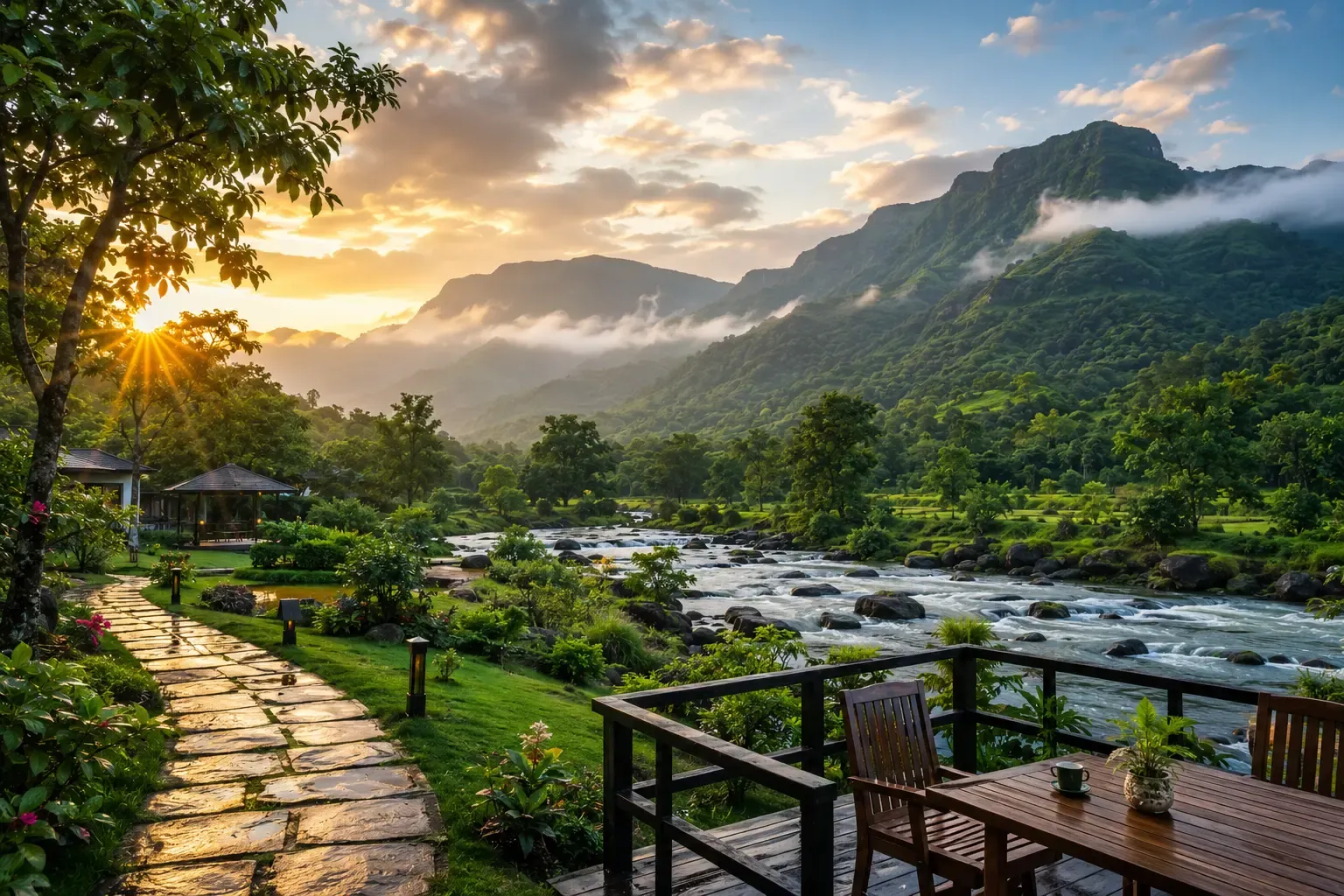
Best Time to Visit Karjat: Month-by-Month Season Guide 2026
By admin · July 15, 2026
Best Time to Visit Karjat: Month-by-Month Season Guide 2026
The best time to visit Karjat depends entirely on what you've come for. If it's waterfalls and the dramatic green Sahyadri landscape, that's June to September. If it's trekking Rajmachi overnight or running the Ulhas River rafting section—October to February. If it's a private pool villa at 25-30% off peak rates with quiet evenings, May still works. These three versions of Karjat are genuinely different destinations in the same location.
This guide breaks down all 12 months with honest assessments of weather, available activities, crowd levels, and villa rates. It also includes a specific July guide — the month most first-time Karjat visitors plan around — with everything you need to know about the peak monsoon experience.
Planning a Karjat stay? WhatsApp Privy Stays—Story By The River availability & rates →
Karjat Seasons at a Glance — Quick Reference
Season
Months
Temperature
What's Open
What's Closed
Villa Rates
Monsoon
Jun-Sep
24-30°C, humid
Waterfalls (peak), Kondana Caves, riverside villa experience
River rafting, Rajmachi overnight (dangerous trail)
20-30% below peak
Winter
Oct-Feb
15-25°C, dry
ALL activities—treks, rafting, caves, cycling, camping
Nothing—full season
Peak rates—book early.
Summer
Mar-May
28-38°C, dry
Pool stays, early morning treks, Kondana Caves
Midday outdoor activity (heat)
15-25% below peak
Month-by-Month Guide: Karjat 2026
Month
Weather
Best For
Avoid
Rating
January
15-22°C, cool & dry
Rajmachi overnight, river rafting, bonfire nights, all treks
Nothing—peak conditions
★★★★★
February
17-25°C, warming slightly
All treks, rafting, cycling, Kondana Caves, Bhivpuri (dry walk)
Late February heat building
★★★★★
March
22-32°C, dry
Kondana Caves, early morning treks, pool stays
Midday trekking (heat)
★★★★☆
April
25-36°C, hot
Pool stays, evening cycling, Kondana Caves AM only
All midday outdoor activity
★★★☆☆
May
27-38°C, hottest
Pool-centric villa stays, night stargazing
Trekking (heat risk)
★★★☆☆
June
25-30°C, pre-monsoon
First monsoon green, Bhivpuri starting, riverside ambience
Rafting (suspended), heavy-rain trail access
★★★★☆
July
24-28°C, full monsoon
Bhivpuri at peak flow, Kondana approach, green photography
Rajmachi overnight, rafting
★★★★★
August
24-28°C, heavy rain
Peak waterfalls, in-villa monsoon experience, lush landscape
Strenuous fort treks (slippery)
★★★★☆
September
25-29°C, tapering
Green landscape persisting, treks resuming late Sept.
Deep waterfall pools (currents), boat trips
★★★★☆
October
22-28°C, post-monsoon
Rajmachi (best post-rain greenery), rafting reopens, cycling
Nothing—excellent month
★★★★★
November
18-26°C, pleasant
All activities, Kondana Caves, camping, river walks
Nothing—excellent month.
★★★★★
December
15-24°C, coolest
Rajmachi overnight, bonfire evenings, winter pool, New Year stays
Nothing—book 8-10 weeks ahead
★★★★★
Monsoon Season in Karjat (June to September)
Monsoon is the most dramatic season and the primary reason most first-time visitors choose Karjat. It's also where the best time to visit Karjat question gets genuinely interesting — because the monsoon Karjat is a specific version of the destination that doesn't exist in any other season.
▶ June—First Green, Pre-Monsoon Build-Up
June is the monsoon arrival month — the first rains hit the Sahyadri by mid-June, the landscape starts greening rapidly, and the Ulhas River begins to rise. Bhivpuri waterfall is starting to build but not yet at full monsoon force. The advantage of June: fewer visitors than July, better trail conditions than August, and the first green flush that feels like the landscape has been switched back on after summer.
What works in June: Early Bhivpuri visits (flow building), Kondana Caves trek, riverside villa atmosphere, first monsoon photography. What doesn't: River rafting still suspended, trails wet but manageable early June.
▶ July—Peak Monsoon, Maximum Waterfalls
July is the month both competitors specifically address—and for good reason. The best time to visit Karjat for waterfalls is July. Bhivpuri, Bekare, and Vagni waterfalls are all at full monsoon force simultaneously. The Central Railway runs direct from Mumbai CST to Bhivpuri station — a 20-minute walk takes you to Bhivpuri waterfall at its most powerful. The Sahyadri hillscape in July is the most visually intense version of Karjat's landscape.
Karjat in July—Specific Guide
Factor
July Reality
Weather
24-28°C, high humidity, heavy intermittent rain. Cool but wet.
Sea/river conditions
The Ulhas River is running full and fast—don't swim in the river. Watch children near riverbanks.
Waterfalls
ALL waterfalls at peak: Bhivpuri, Bekare, and Vagni—the best version of all three simultaneously.
Bhivpuri access
Train from Mumbai CST to Bhivpuri station (request halt) + 20-min flat walk. No driving needed.
Kondana Caves
Accessible, but trail is wet and slippery near the top—wear proper footwear.
Rajmachi Fort overnight
NOT recommended in July—the trail is dangerously slippery and unsafe for overnight in the monsoon.
River rafting
CLOSED—suspended June through September. Reopens October.
Villa experience
Private pool open. In-villa stay specifically recommended for July—monsoon ambience without exposure.
Crowd level
High on weekends—Bhivpuri station gets crowded by 9 AM Saturday. Arrive by 7:30 AM.
Rates
20-25% below peak—good value for the best waterfall experience.
July tip: The Bhivpuri train from Mumbai CST leaves at specific times—check the Central Railway schedule before planning. A missed train adds 1.5 hours via road. Carry a waterproof bag, rubber footwear, and a change of clothes.
▶ August—Heaviest Rain, Waterfall Peak Continues
August is the wettest month—the heaviest single-day rainfall of the year typically falls in July-August. The waterfalls are at sustained peak from late July through August. The difference from July: August trails are more waterlogged, and the river is at its highest. The in-villa monsoon experience—private pool, covered veranda watching the rain, Maharashtrian chef cooking on request—is specifically excellent in August when outdoor activity windows are shorter.
What works in August: All waterfall visits (peak), in-villa pool stays, Kondana Caves (morning visit before afternoon rain), and riverside villa atmosphere. What doesn't: Rajmachi overnight, strenuous fort treks (slippery), river proximity (high and fast).
▶ September—Green Persists, Activities Resume
September is the best monsoon month for first-time family visitors — the landscape is still peak green, the rain becomes more intermittent and predictable, and late September sees some trails begin to dry. Rajmachi Fort becomes accessible again from late September. River rafting typically resumes October 1st. Crowd levels drop from the July-August peaks as schools reopen in most cities.
Winter Season in Karjat (October to February)
Winter is the best time to visit Karjat for active travelers. Every activity is available simultaneously — Rajmachi Fort overnight trek, Ulhas River white water rafting, Kondana Buddhist Caves, cycling through village roads, and camping on the Rajmachi plateau. The Ulhas River has settled from monsoon turbulence to manageable rafting levels (Grade II-IV). Temperature ranges from 15°C at night to 25°C in the afternoon—the most physically comfortable conditions of the year.
Why Winter Is the Peak Season for Activities
Activity
Monsoon (Jun-Sep)
Winter (Oct-Feb)
Summer (Mar-May)
Rajmachi Fort overnight trek
Dangerous—slippery trail
BEST — dry trail, clear views
Hot—early morning only
Ulhas River rafting
Suspended—too dangerous
BEST—Grade II-IV
Available until June
Bhivpuri waterfalls
BEST — full monsoon flow
Reduced or dry
Dry
Kondana Buddhist Caves
Wet trail (Nov-Feb ideal)
BEST—dry trail, full access
Available (hot)
Riverside villa pool
Open all year
Open — cooler air makes pool pleasant
Open—heat makes pool essential
Cycling village roads
Wet roads
BEST—flat, dry, cool morning
Hot—early AM only
Camping (Rajmachi base)
Wet ground
BEST — cool nights, clear sky
Too hot
October and November — Post-Monsoon Sweet Spot
October and November are specifically underrated months. The landscape is still green from the monsoon, but the trails have dried enough for trekking. Rajmachi Fort in October has a unique character — the monsoon green clinging to the hillside, clear post-rain visibility from the fort plateau, and temperatures that haven't yet hit the winter chill. River rafting reopens October 1st. Crowd levels are lower than the December-January peak. Best combination of green landscape + full activity availability in the entire Karjat calendar.
December to February—The Social Season
December through February is when Karjat's villa scene is at its most active. Bonfire evenings on riverside decks, overnight Rajmachi treks under cold clear skies, and the New Year long weekend (the single highest-demand window of the year — book Story By The River by October for December 26-January 2). The Ulhas River rafting is at its most reliable during these months with consistent water levels. Night temperatures can drop to 12-15°C in January—carry layers.
Summer Season in Karjat (March to May)
Summer is the least-discussed season and, honestly, the most misunderstood. It's not the best time to visit Karjat for outdoor trekking—it's specifically the best time for a private pool villa stay at significantly reduced rates. March and early April still have manageable temperatures (22-30°C) for morning trekking. By May, the heat (35-38°C in the afternoon) makes outdoor activity genuinely uncomfortable between 10 AM and 5 PM.
The case for summer Karjat: the private pool at a riverside villa when the Ulhas is calm and low, stargazing from the outdoor deck on clear summer nights, and the quietest version of the destination you'll experience all year. Kondana Caves in April is still accessible and significantly less crowded than October-February. River rafting continues through May.
Summer rate advantage: Villa rates run 15-25% below peak season in March-May. A villa at ₹15,000-18,000/night in January runs at ₹12,000-14,000 in April. For the pool-centric stay, it's the best financial combination of the year.
Top Karjat Attractions — Best Season for Each
Attraction
Best Season
Distance from Karjat Town
Family-Friendly
Bhivpuri Waterfall
July-August (monsoon peak)
Train: Bhivpuri station + 20-min walk
Yes—flat walk, all ages
Bekare Falls
July-September
Near Bhivpuri village, 20-30 min walk
Age 10+ (rocky trail)
Vagni Falls
July-August
Vagni station (request halt, train)
Yes—minimal walk from station
Rajmachi Fort Trek
October-February (BEST) + June
~16 km one way—overnight recommended
Age 12+ for overnight trek
Kondana Buddhist Caves
October-February
Kondana village, ~1 hour trek
Age 7+—manageable trail
Peth Fort (Kothaligad)
October-February
Ambivali village, ~20 min from town
Age 7+—beginner trail
Ulhas River Rafting
October-June (NOT monsoon)
Rafting operators near Karjat town
Age 10+ for Grade II
Ulhas Valley Nature Walk
October-February (best) or monsoon (green)
From Karjat town—self-guided
All ages
Chanderi Fort Trek
October-February
4-5 hours return, moderate
Age 12+
Karjat Food: What to Eat and When to Find It
Local Maharashtrian food is available year-round in Karjat, but specific items peak by season. The in-villa chef experience at Story By The River gives the most direct access to seasonal Karjat cooking.
Dish
Season
Where to Find
Pithla Bhakri (chickpea flour gravy + millet flatbread)
Year-round
Karjat local dhabas, in-villa chef on request
Bharli Vangi (stuffed brinjal curry)
Year-round
Local restaurants near the station, in-villa
Varan Bhaat (dal with rice, ghee)
Year-round
Standard at all local dhabas
Kothimbir Vadi (coriander fritters)
Year-round
Street stalls near Bhivpuri—monsoon snack
Monsoon fish curry (Ulhas River variety)
June-September
Local riverside eateries—fresh seasonal catch
Fresh coconut water + sugarcane juice
Best in summer (Mar-May)
Village roadside stalls on the Karjat approach road
Modak (steamed sweet dumpling)
August-September (Ganesh Chaturthi)
Local sweet shops, in-villa chef for festival stays
Where to Stay in Karjat: Story By The River—Privy Stays
For any version of the best time to visit Karjat — whether that's the July monsoon waterfall experience, the October Rajmachi trek, or a December bonfire weekend — Story By The River is the PrivyStays base that makes it work. A 3 BHK riverside luxury villa on the Ulhas River with rustic brick architecture, warm wooden interiors, and outdoor space facing directly onto the river.
Story By The River — Season-by-Season Experience
Season
Story By The River in This Season
Monsoon (Jun-Sep)
The river is running full and green. Covered outdoor deck for rain-watching. Pool open. Leave for Bhivpuri by 7 AM, return for villa lunch.
Winter (Oct-Feb)
Cool evenings for a bonfire on deck. Dawn departures for Rajmachi trek. Ulhas River at calm rafting level — walk to operators from villa.
Summer (Mar-May)
Private pool in afternoon heat. Quiet surroundings—fewest guests of the year. Stargazing on deck after cool sunset. 25% off peak rates.
Configuration: 3 BHK, up to 8-10 guests Location: Ulhas River, Karjat Direct booking: privystays.com/villa/luxury-3bhk-villa-in-karjat/ Concierge: Trekking guide arrangement, Bhivpuri train timing, rafting operator contacts—all coordinated on WhatsApp
Full Karjat activity guide: Things to Do in Karjat: Waterfalls, Treks, and Nature Escapes 2026.
Book Story By The River for monsoon, winter, or summer—WhatsApp Privy Stays →
How to Reach Karjat from Mumbai and Pune
From
Best Route
Time
Monsoon Note
Mumbai (CST)
Central Railway—CST to Karjat direct
~1.5 hrs by train
Most reliable monsoon option. No traffic, no flooding risk.
Mumbai (road)
NH48 via Panvel + Khopoli
~2 hours
NH48 is generally reliable in monsoons.
Pune
Road via the Pune-Khopoli route
~3 hours
Good highway, less congested than Pune-Mumbai. Plan extra time in heavy rain.
Navi Mumbai
Road via Khopoli or train from Panvel
~1.5 hours
Khopoli Road is scenic in the monsoon.
Bhivpuri (for waterfall)
Central Railway—any Mumbai station to Bhivpuri (request halt)
~2 hours from CST
Confirm the train at the Bhivpuri halt before leaving. Not all trains stop.
FAQ: Best Time to Visit Karjat
Q1. What is the best time to visit Karjat?
ANS. The best time to visit Karjat depends on your purpose. For waterfalls: July-August (monsoon peak). For trekking, rafting, and all outdoor activities: October to February (winter). For pool villa stays at the lowest rates: March-May (summer). For the most balanced experience: October-November, when the landscape is still green from the monsoon and all activities are available.
Q2. Is Karjat good to visit in July?
ANS. July is the single best month for waterfalls near Karjat. Bhivpuri, Bekare, and Vagni falls are all at peak monsoon force simultaneously. The Central Railway makes Bhivpuri waterfall accessible without a car—2 hours from Mumbai CST to Bhivpuri station, 20-minute flat walk to the falls. July weekends are crowded; arrive by 7:30 AM. River rafting is suspended, and overnight in Rajmachi is not recommended due to slippery trail conditions.
Q3. What is Karjat famous for?
ANS. Karjat is famous for three things: the monsoon waterfall circuit (Bhivpuri leading the list), the Rajmachi Fort overnight trek (the most popular fort overnight near Mumbai), and white water rafting on the Ulhas River. Beyond those, Kondana Buddhist Caves (1st century BC), ND Studios (Bollywood outdoor sets), and the riverside villa experience along the Ulhas are the other specific draws.
Q4. How many days are enough for Karjat?
ANS. 2 nights and 2-3 days is the ideal Karjat trip — one day for waterfalls or trekking and one day for a slower activity (Kondana Caves, cycling, riverside walks). For the best time to visit Karjat for an overnight trek (Rajmachi), add a third night at the base before starting. For a pure pool-villa monsoon trip without hiking, 2 nights is sufficient.
Q5. Can you visit Karjat without a car?
ANS. Yes—and for the Bhivpuri waterfall specifically, the train is actually better than driving. Central Railway runs from CST, Dadar, Kalyan, and Panvel directly to Karjat (about 1.5-2 hours). For Bhivpuri waterfall, take the same train to Bhivpuri station (request halt). Auto-rickshaws run from Karjat station to the town and nearby areas. Villa pickup from the station can be arranged through Privy Stays.
Q6. Is Karjat safe for families with children in the monsoon?
ANS. Yes, with specific precautions. Bhivpuri waterfall (flat walk from station) is safe for families with children of all ages. Don't allow children near the deep waterfall pool or riverbank during heavy monsoon flow—the current is strong. Kondana Caves is accessible for children 7+ on a wet trail with proper footwear. Avoid Rajmachi overnight trek with children under 12 in any season—the trail demands experience.
Q7. What should I pack for a Karjat monsoon trip?
ANS. • Waterproof jacket or raincoat—umbrella doesn't work near active waterfalls
• Rubber sandals or waterproof hiking footwear—essential for the Bhivpuri trail
• Dry bag or waterproof pouch for phone—waterfall spray reaches 5-10 metres
• Change of clothes + extra pair of socks—plan to get wet at Bhivpuri
• Anti-tick spray if visiting Kondana Caves or Rajmachi base—grass trails in monsoon
• Small backpack with water, snacks, and a basic first aid kit for waterfall walks
The Bottom Line
There is no single correct answer to the best time to visit Karjat—there are three correct answers depending on what you're looking for. The monsoon version (July-August) is Karjat at its most dramatic and photographed. The winter version (October-February) is Karjat at its most active and comprehensive. The summer version (March-May) is Karjat at its quietest and most affordable.
Story By The River from Privy Stays works in all three versions — riverside atmosphere in monsoon, cool bonfire evenings in winter, and private pool afternoons in summer. The villa anchors whichever version of Karjat you've decided to experience.
Browse Story By The River at privystays.com/villas/nagaon/privy-stays-luxe-forest-villa or WhatsApp our concierge with your dates — availability and current rates within 5 minutes.